Ikiru
Ikiru
Directed by Akira Kurosawa
Photographed by Asakazu Nakai
1952
Starring: Takashi Shimura
Click Here for club scene.
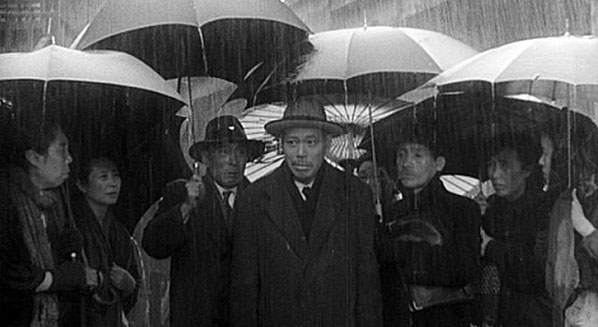
Akira Kurosawa needs no introduction. The man basically has a whole genre that was created in homage to his Jidaigekis, the Spaghetti Western. One of my favorite Kurosawa films, however, isn't a samurai period film. Ikiru is contemporary film that deals with a subject that anyone rarely touches, especially in the 1950's, the meaning of life. Takashi Shimura plays Watanabe, a hard working man who finds out he has stomach cancer. Finding himself alone, after being neglected by his son, Wantanabe drowns in his sorrows. Later on, he decides to find his meaning in life, with less than a year to live. The film's beautiful message is presented to us in an ingenious way by Kurosawa, with Wantanabe singing. My favorite sequence of the film leads up to the song, Gondola no Uta. Wantanabe find himself at a bar telling his situation to a young writer. Tormented with grief for the old man, the writer decides to take him out on a tour of Tokyo's nightlife. They bar hop, club hop, drink hop, girl hop until they end up at this one nightclub. The way Kurosawa films the entrance to the club, lets us know something important is about to happen. I really like when they are ascending up the stairs and the camera goes up with them from a profile angle, it creates expectation. When they enter the club there is a boisterous atmosphere, with everyone drinking and dancing and the live piano, I can't help but notice similarities in Tarantino's Kill Bill Vol. 1 Japanese club scene and this one, but that's probably me just overthinking. Suddenly Wantanabe asks the pianist for The Gondola Song, the way Kurosawa decides to show the beginning of the song is brilliant! He first shows everyone slow dancing to song, but as soon as Wantanabe starts singing with such sorrow, people begin to notice how personally tied this man is to the words from the song. They begin to uncomfortably sit down, and us as the audience begin to pay attention to the lyrics. It's fucking alluring. From this point of the movie, he "starts to live." He then does everything in order to make his last few months in this life worth it. Then third act of the film consists of colleagues talking about Wantanabe at his wake. Kurosawa is definitely one of those directors that was ahead of his times, finding creative ways to tackle down important subjects with the restrictions the Japanese government imposed against him.