The Bicycle Thieves
Ladri di Biciclette
Directed by Vittorio De Sica
Photographed by Carlo Montuori
1948
Starring: Lamberto Maggiorani, Enzo Staiola
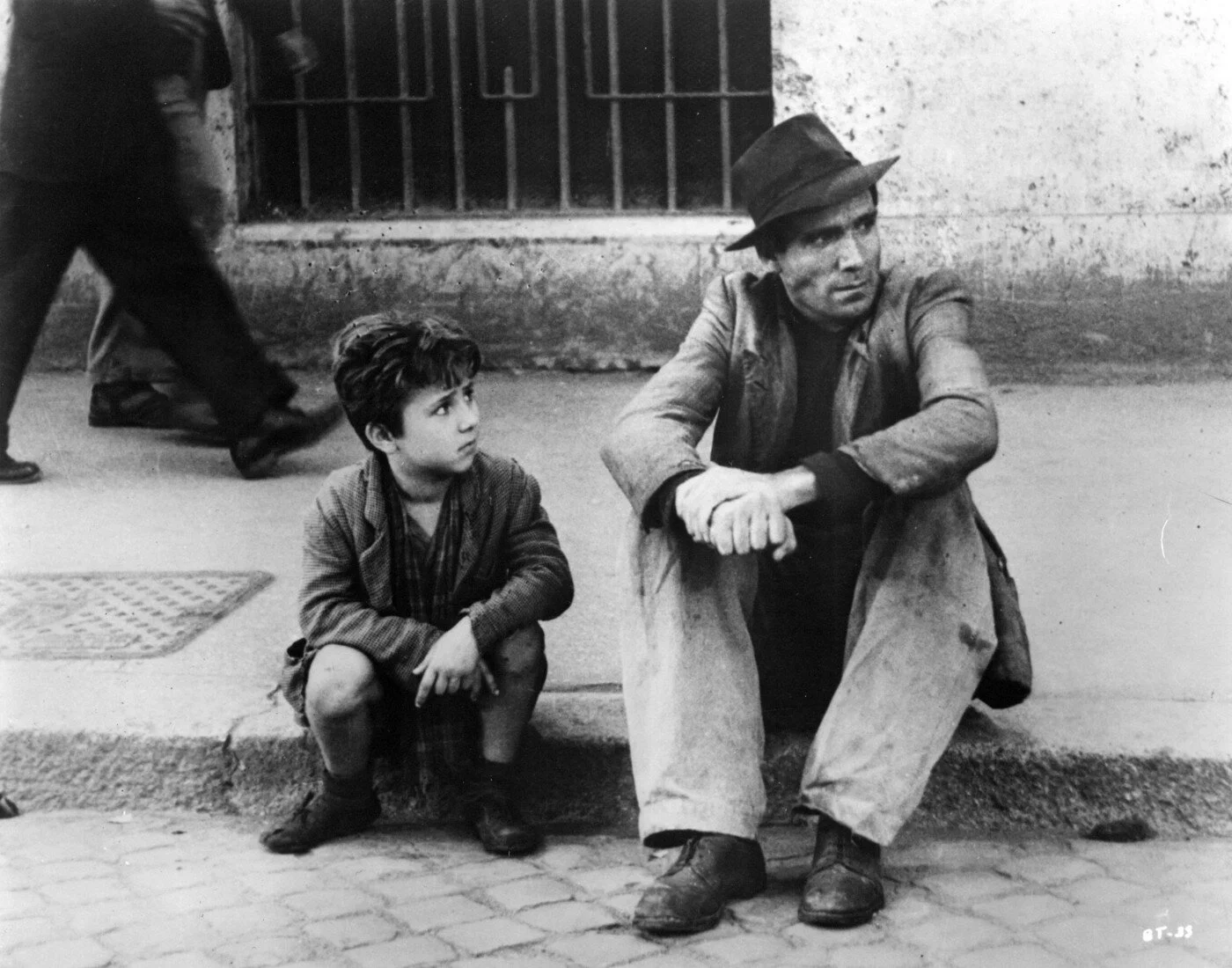
Italian Neo-Realism is one of the purest forms of cinema and Bicycle Thieves was at the forefront. Lamberto Maggiorani stars as Antonio Ricci, a hopeless man searching for his bike throughout war-torn Rome. Ricci is offered a job during these difficult times but is required a bike in order to complete his duties. On his first day of work, however, his bike is stolen and after a short pursuit, the thief becomes another face in the crowd. Armed with desperation (and his younger son BRUNO), Ricci sets out to find this thief and his bike Director Vittorio De Sica tells the story in a very slow pace, similar to the lives the characters in this world are stuck living. The bicycle represents much more than a mode of transportation, it’s Ricci’s right to work, his passage to a better life, but just like that it was taken from him. Bruno represents the innocence that Antonio’s hard knock life has robbed him of. So much so, that Antonio seems to almost neglect Bruno the whole film, exposing him to dangers and leaving him alone in the big city, never holding his hand. Maggiorani’s acting is as disoriented as the city itself, being left behind as remnants of the the atrocious and infamous second world war.
The mournful narrative doesn’t have a positive outcome either and this is why it’s called Italian Neo-Realism, because it’s real. After finding the thief but not the bike, Antonio himself tries to steal a bicycle but is chased and caught and beaten and embarrassed by a mob. The bike owner notices little Bruno screaming for his dad and in an act of empathy lets Antonio go. The final shot shows Antonio and Bruno walking among a sea of people, bikeless, but holding hands for the first time.