Orfeu Negro
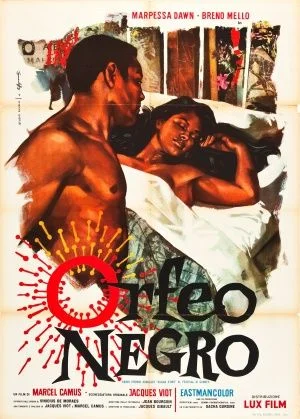
Orfeu Negro
Directed by Marcel Camus
Photographed by Jean Bourgoin
1959
Starring: Breno Mello, Marpessa Dawn
Watch last scene here
Based on the Greek myth of Orpheus, Black Orpheus takes place in a contemporary slum in Rio De Janeiro. Being a Bossa enthusiast myself, I have a great admiration for this picture because of its soundtrack. The story takes place during Carnaval, a Brazilian traditional festival. Orpheus, a young and vibrant bus driver has a beautiful musical talent, it is said that with his guitar he makes the sun rise. This picture was filmed entirely on location in a Favela and used a lot of its inhabitants as actors and extras, very neo-realist of Camus wouldn't you say? Breno Mello actually got offered the part as he was walking down the street! All of these details are evident in the movie, but it doesn't matter because it's not the acting, or production value that make this film an excellent one, but its powerful images and content. This film is not outfitted with extravagant camera movements or the most adequate lighting (with the exception of the underworld scene), but none of this matters because the power of the images comes from the vigorous colors and the movement of the characters. The movie itself feels like its always dancing, giving the viewer a sense of happiness without him/her even knowing it. It's almost as if the film's energetic and playful colors are the protagonist. Another factor to the film's great capacity is it's soundtrack. With haunting beautiful Bossa Nova that can bring tears to the most nefarious person in the room to upbeat and happy Samba that will have you tapping your foot for hours, this film's soundtrack is truly an accomplishment. It's no wonder to me why Black Orpheus took home the academy award for best foreign picture in 1960. The film's compelling ending shows three young happy children, taking over Orpheus's demanding duty to the world of making the sun rise with glorious music. Que Saudade!