The Third Man
The Third Man
Directed by Carol Reed
Photographed by Robert Krasker
1949
Starring: Joseph Cotten, Valli, Orson Welle
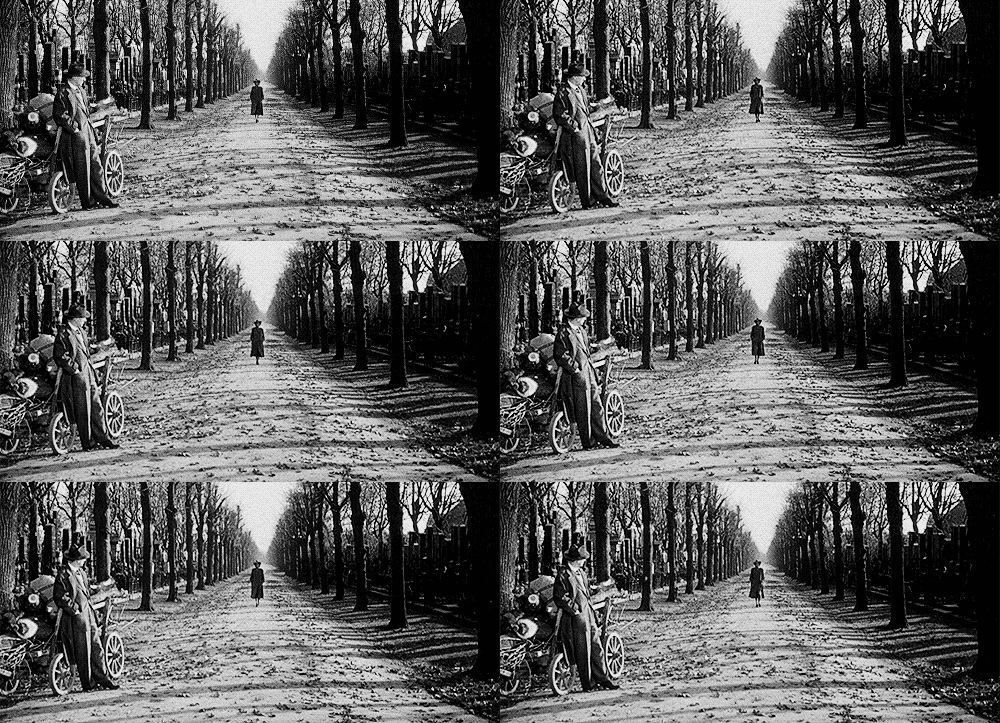
Here is a link to the picture's haunting closing scene.
Set in post war Vienna, where paranoia was just another civilian, The Third Man is the story of Pulp writer investigating his friend’s murder. As he arrives from America, Holly Martins (played by Joseph Cotten), is taken in by the news that Harry Lime (played by Orson Welles) has been deceased in a car accident. At first Martins is please with the explanation given to him, but as the story unravels more questions arise and so does his suspicion. The film’s use of Dutch angles throughout create a sense of uneasiness, this makes it easy not to trust anyone. The darkness and harshness of the black and white photography show us just how dark these characters can actually get. In order to talk about my favorite sequence in the film, I will have to spoil it in case you haven’t seen it. This is your last chance to stop. An hour and 5 minutes into the movie, Harry Lime comes forth from the shadows (literally), and it is revealed that Harry not only faked his death, but has done it in order to flee the authorities now that he is a criminal. Extremely heart broken by what his friend has become, Martins agrees to go on and help them capture him. Now the best achievement in the picture, in my humble opinion, is the chase sequence. There is just something so anapestic about it. As Harry climbs down into the sewers to make his escape, the police and his buddy Martins follow him down. This transition to the sewers, or Vienna’s underworld, turn the picture even darker, making shadows even sharper and adding fuel to our paranoia’s fire. Although Lime is clearly cornered with no options but to give himself up, there is still hope in this man, and we find ourselves somewhat rooting for him, wanting him to get out of this situation. The expressionistic lighting in this sequence is beyond admirable, making this one of my favorite Film Noir of all times.